Oil Prices Retreat After Rising Earlier Today
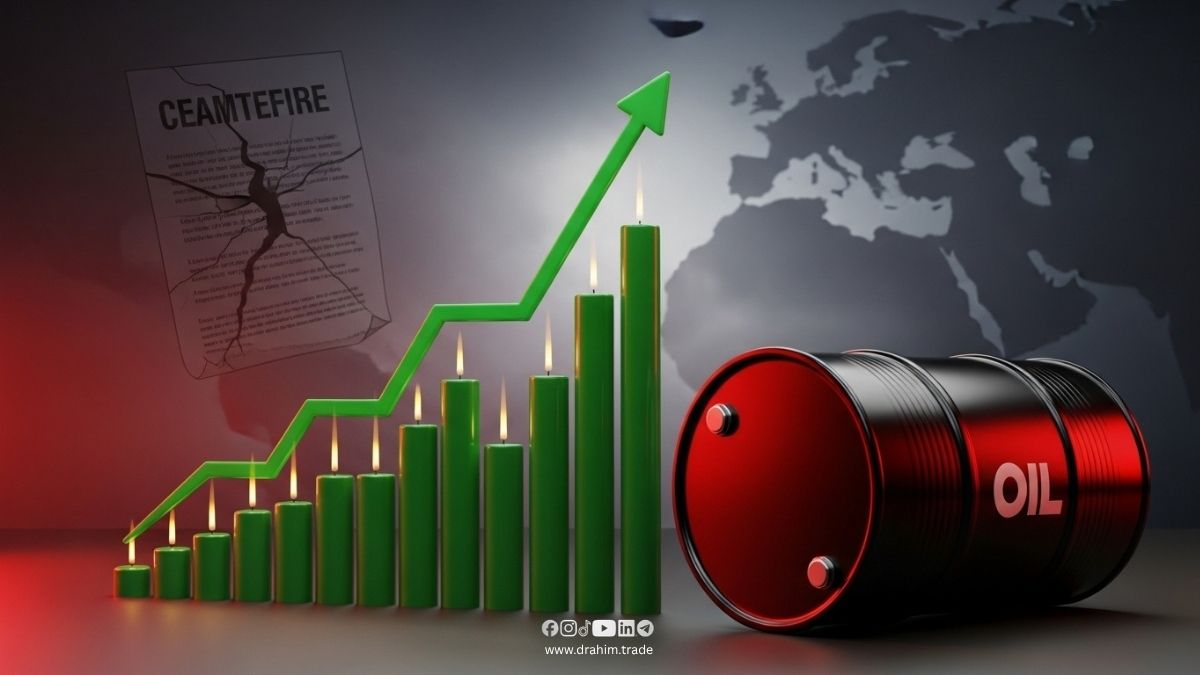
Attention is currently focused on oil prices amid developments in the Middle East. With negotiations failing and the likelihood of military escalation increasing, Brent crude rose today to nearly $115 per barrel, before pulling back after morning trading to its current level.
Brent crude reached its highest level in a month today, then declined to $109.70 in the futures market, while West Texas Intermediate is trading at $105.97. This price behavior coincides with the U.S. administration studying potential military escalation against Iran despite a ceasefire.
It is clear that U.S. President Donald Trump is seeking to exert greater pressure on the Iranian regime in order to force it to accept U.S. conditions—namely reopening the Strait of Hormuz and immediately halting nuclear activities for several years. Talks have yielded no results; in fact, Iran proposed postponing negotiations over nuclear work and research in exchange for reopening Hormuz, a proposal that was rejected by the U.S. administration.
Therefore, potential U.S. military escalation may act as a catalyst to accelerate decision-making in Iran, compelling it to comply and resume negotiations. Nevertheless, Iranian stalling has so far been the dominant pattern in responses.
With the continued closure of the Strait of Hormuz and the U.S. blockade of Iranian ports, oil prices are rising, reflecting global concern over the persistence of these conditions. A report from the U.S. Energy Information Administration yesterday evening showed that U.S. crude inventories fell sharply by 6.2 million barrels during the third week of April.
Caution Defines the Federal Reserve’s Decision
The Federal Reserve decided yesterday evening to hold interest rates steady once again. During the press conference, Chair Jerome Powell indicated that the Fed is currently adopting a wait-and-see approach, with economic data serving as the primary determinant of future decisions. He also clarified that there is no near-term intention to cut interest rates, though such a move could be considered if necessary.
It is worth noting that this month’s Federal Reserve meeting is Powell’s last as Chair. In mid-May, Kevin Warsh will begin his term as the new Fed Chair. Powell confirmed to reporters that he will remain a member of the Board after his term as Chair ends.
Warsh will face several pressures and challenges upon assuming his new role. The U.S. economy is dealing with inflation driven by rising oil prices and tariffs, while the administration is also attempting to pressure monetary policymakers to cut interest rates—despite the Fed’s repeated assertion that its decisions are fully independent and will not be influenced by political interference.