Report on the Role of Asia’s Economy in Advancing Artificial Intelligence
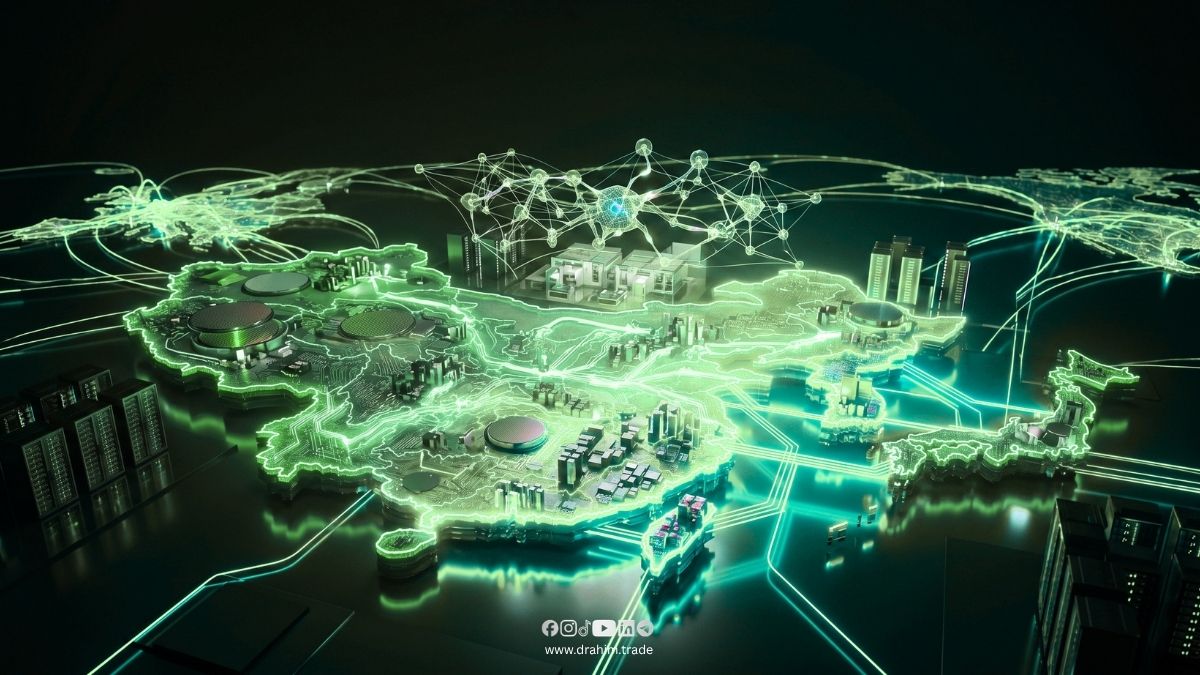
Asia’s economy is undergoing a major transformation due to heavy investment in artificial intelligence and semiconductors, making the continent a central player in global technological competition. Today, Asia is considered the industrial hub for producing the electronic chips required for AI applications, especially in China, Taiwan, South Korea, and Japan.
Major Companies:
Taiwan’s TSMC leads the advanced semiconductor manufacturing market, producing more than 60% of the world’s contract chips and holding the largest share of chips used in AI servers.
Samsung Electronics also plays a key role in memory chips and advanced semiconductors, while China’s SMIC seeks to reduce China’s dependence on Western technology despite U.S. restrictions.
Asia’s Contribution to Global AI Production:
Asia is estimated to contribute more than 70% of the global production of chips linked to AI infrastructure.
Asian companies have become real competitors to American and Western technology firms. China owns giant companies such as Alibaba Group, Tencent, and Baidu, while South Korea and Taiwan dominate the electronic components sector.
However, U.S. companies such as NVIDIA, Microsoft, and OpenAI still maintain an advantage in software, advanced language models, and research innovation.
The Technology Bubble:
Economists warn of the possibility of a “technology bubble,” which refers to an excessive rise in stock prices compared to companies’ real value or actual profits.
A bubble occurs when investors rush to buy stocks based on future expectations without sufficient real returns. Some analysts believe that the global enthusiasm for AI resembles the internet bubble of the late 1990s due to inflated company valuations, excessive investment, intense competition, and reliance on uncertain future expectations.
Will Asia Dominate the Future Technology Market?
The possibility of Asian companies dominating the global AI industry depends on several factors.
Asia has strong advantages in manufacturing, supply chains, and production costs, while the United States still leads in software, innovation, and venture capital. Therefore, the world is more likely to witness a dual leadership model shared between the United States and Asia rather than dominance by one side alone.
Major Asian Technology Companies:
Among the most important Asian companies listed in global indices are TSMC, Samsung Electronics, Alibaba Group, Tencent, and Sony Group. In addition, startup companies in semiconductors and AI across China, India, and Singapore are seeking listings in global markets in the coming years to attract funding and expand.
The Role of Governments:
Asian governments play a central role in supporting this sector through tax exemptions, funding research centers, supporting technical education, and providing digital infrastructure. China has allocated billions of dollars to develop local chips, while South Korea and Japan offer major incentives to attract semiconductor factories.
Future Outlook for Asian Technology:
By 2030, three main scenarios can be imagined:
Asian Dominance Scenario: If China, Taiwan, and South Korea succeed in developing independent technologies and reducing reliance on the West.
Global Balance Scenario: Continued shared leadership between Asia and the United States, which is considered the most likely scenario.
Relative Decline Scenario: If trade restrictions or geopolitical crises slow the growth of the Asian technology sector.
Recommendations for Investors:
Key recommendations for investors include diversifying investments between semiconductor and software companies, avoiding reliance solely on AI stocks, monitoring geopolitical risks between China and the United States, and focusing on companies with real profits and long-term innovation capabilities instead of short-term speculation.