Analytical Report on Oil Prices
First: Current Price Situation
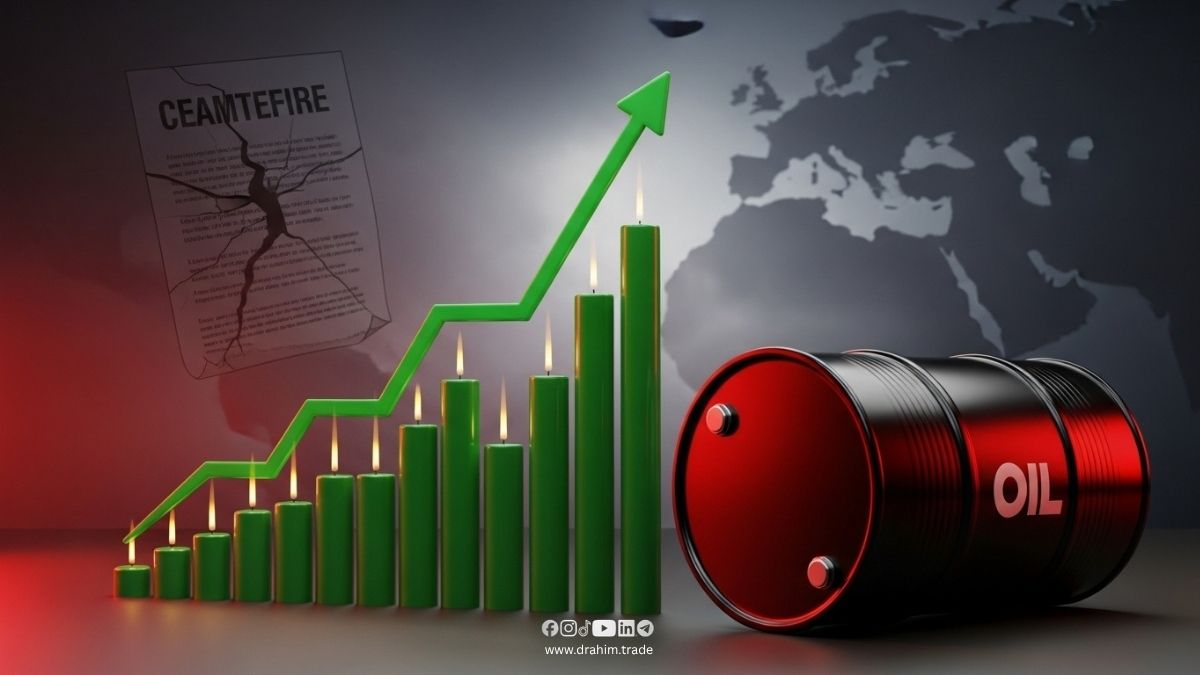
Global oil markets have witnessed a notable surge in recent periods. Brent crude is trading at approximately $115 per barrel, while West Texas Intermediate (WTI) stands at around $108 per barrel. Prices have recorded an increase exceeding 15% within a few weeks, a sharp rise that reflects clear tension in the balance between supply and demand.
This surge is attributed to a combination of interrelated factors, most notably escalating geopolitical risks, potential disruptions in supply chains, and influential political and economic decisions by major global powers.
Second: Key Factors Affecting the Markets
1. Geopolitical Tensions and Military Escalation
The U.S. administration’s consideration of launching a new military strike against Iran is among the most significant factors raising market concerns. Iran is a key player in the oil market, and any military escalation could disrupt its exports or ignite a broader regional conflict, threatening global supplies.
2. Continued Closure of the Strait of Hormuz
The Strait of Hormuz represents a vital artery through which about 20% of global oil trade passes. Any continued disruption or threat to navigation directly drives prices upward due to fears of supply shortages and rising transportation and insurance costs.
3. UAE Withdrawal from OPEC
The UAE’s planned withdrawal from OPEC starting May 1 introduces a new element of uncertainty. As an important producer, its exit could weaken internal cohesion within the organization and affect OPEC’s ability to manage oil supply in a coordinated manner.
4. U.S. Federal Reserve Decision to Hold Interest Rates Steady
The Federal Reserve’s decision to maintain interest rates reflects caution regarding the U.S. economy. While this may support oil demand in the short term, it also signals concerns about potential economic slowdown, creating a dual impact on markets.
Third: Economic Analysis
1. Impact of Tensions on Supply
Geopolitical tensions, particularly in the Middle East, reduce actual or expected oil supply. Markets inherently react to expectations as much as to current realities; thus, even the mere possibility of supply disruptions drives prices higher.
2. Impact on the Global Economy
Rising oil prices exert inflationary pressure on energy-importing economies, especially in Europe and Asia. This leads to:
- * Increased production and transportation costs.
- * Declining consumer purchasing power.
- * Slower economic growth.
In the medium term, this may push central banks toward tighter monetary policies, increasing the likelihood of recession in some economies.
Fourth: Future Scenarios
1. Oil Price Scenarios
- Bullish Scenario (High Probability):
Continuation of tensions or military escalation could push prices to around $120 per barrel.
Reason: Supply disruptions and rising geopolitical risk premiums. - Moderate Scenario (Medium Probability):
Containing tensions without actual escalation, while maintaining current supply constraints, may keep prices around $100 per barrel.
Reason: A fragile balance between supply and demand. - Bearish Scenario (Low Probability):
A political breakthrough or sudden increase in production could push prices below $90 per barrel.
Reason: Improved supply conditions and reduced risk concerns.
2. OPEC Decision Scenarios
- * Maintaining production cuts (most likely): to sustain high prices.
- * Limited production increase: if prices rise excessively and threaten demand.
- * Additional cuts: in case of clear signs of sharp global economic slowdown.
Conclusions and Recommendations
Conclusions:
- * The current rise in oil prices is primarily driven by geopolitical factors rather than purely economic fundamentals.
- * Markets are experiencing high uncertainty, increasing price volatility.
- * Developments in the Middle East will remain the decisive factor in determining price trends.
Recommendations:
- For policymakers: Strengthen strategic oil reserves to mitigate shocks.
- For investors: Diversify portfolios to reduce exposure to energy market volatility.
- For importing countries: Accelerate the transition toward alternative energy sources to reduce dependence on oil.
Overall, oil markets remain in a sensitive phase, where political dynamics outweigh traditional economic factors, necessitating close monitoring of upcoming developments.