Report on the anticipated visit of the American President to China.
In May 2026, an anticipated visit by U.S. President Donald Trump to China is expected to take place, during which he will meet Chinese President Xi Jinping in an attempt to reset relations between the world’s two largest economies amid escalating political and trade tensions.
Economic Relations Between the Two Countries:
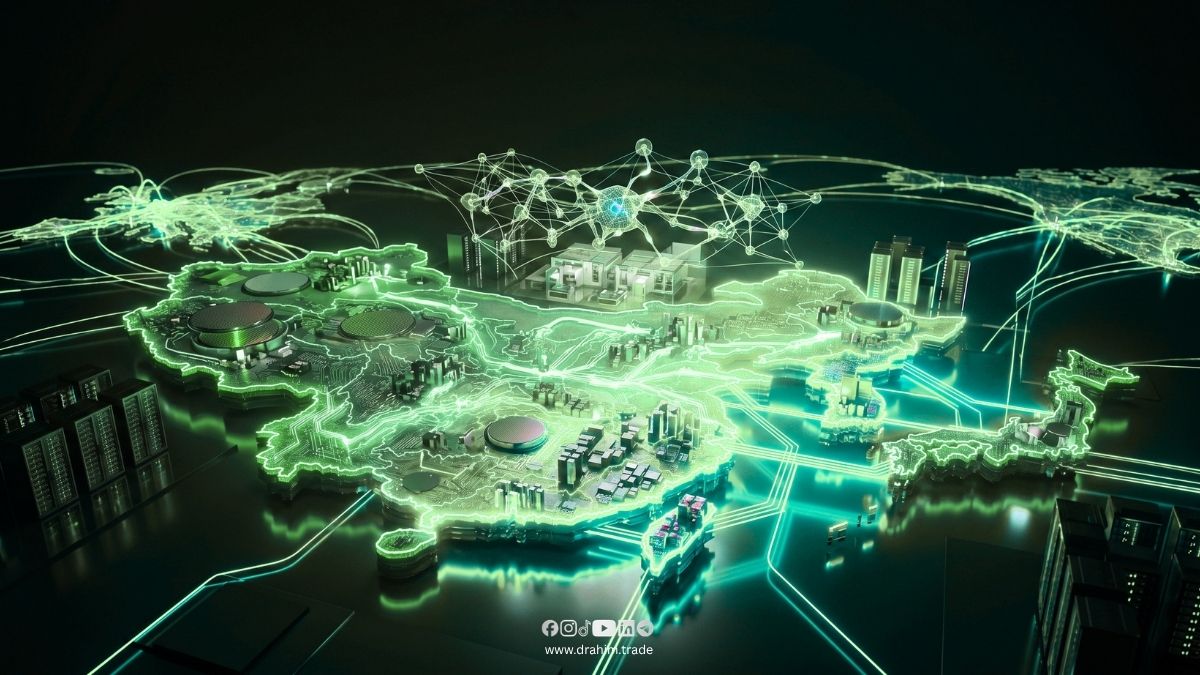
U.S.-China relations are currently characterized by what can be described as “managed competition.” Economically, China remains a major trading partner of the United States despite the ongoing trade war and the reciprocal tariffs imposed since Trump’s first term.
American Objectives:
Washington seeks to reduce the trade deficit and protect American industries.
Chinese Objectives:
Meanwhile, Beijing is working to preserve its exports and expand its global economic influence.
Shared Objectives:
Despite the tensions, both sides still need to strengthen mutual relations in the fields of technology, energy, rare earth minerals, and investments.
Political Relations Between the Two Countries:
Politically, the relationship is witnessing sharp disagreements over Taiwan, artificial intelligence, and military influence in Asia, in addition to China’s relations with Russia and Iran. Beijing considers the Taiwan issue “the greatest risk factor” in bilateral relations, while Washington refuses to alter its military and political support for Taiwan.
Why Did Presidential Visits Stop?
Official visits by U.S. presidents to China have been interrupted for nearly a decade due to several factors, most notably:
the escalation of the trade war since 2018, the COVID-19 pandemic, tensions surrounding Taiwan, U.S. accusations against China regarding intellectual property theft and industrial espionage, as well as the decline in strategic trust between the two countries. Geopolitical shifts and intensifying competition for global economic leadership have also complicated relations and prevented regular presidential visits.
Key Issues on the Agenda:
Discussions between Trump and Xi Jinping are expected to focus on five main issues:
1- Extending the trade truce and reducing tariffs.
2- Taiwan and the U.S. military presence in Asia.
3- Artificial intelligence and advanced technology.
4- The war in the Middle East and relations with Iran.
5- Economic cooperation and deals related to aviation, agriculture, and energy.
China’s Position on the War in the Middle East:
Regarding the Middle East, China adopts a position that calls for de-escalation and diplomatic solutions while opposing broad military escalation. Beijing maintains strong economic ties with both Iran and the Gulf states and seeks to present itself as a balanced international mediator. However, Washington accuses China of economically supporting Tehran through oil purchases and the provision of certain dual-use technologies.
The Trade War
There is no doubt that the trade war and U.S. accusations concerning intellectual property theft and Chinese government support for domestic companies will affect the meeting, but they are unlikely to prevent it from taking place. Both sides realize that continued escalation harms the global economy and financial markets, especially amid slowing global growth and rising geopolitical risks. Therefore, both countries are expected to focus on managing disagreements rather than resolving them entirely.
Key Expectations Regarding the Two Countries’ Positions:
The American Position:
The U.S. position is likely to maintain demands related to reducing Chinese government subsidies for industries, increasing purchases of American goods, and strengthening intellectual property protections, while continuing pressure regarding Taiwan. This is driven by Trump’s desire to achieve domestic economic and political gains ahead of upcoming elections.
The Chinese Position:
In contrast, China will seek to preserve the trade truce, reject any U.S. interference in the Taiwan issue, and maintain its technological and economic independence, while offering limited economic concessions to ease American pressure.
This reflects Beijing’s desire to stabilize its economy and prevent tensions from escalating into a broader confrontation.
Advice for Investors
Investors are advised to closely monitor the outcomes of the visit, particularly regarding tariffs, supply chains, technology, and energy. It is also preferable to diversify investment portfolios and reduce dependence on sectors highly sensitive to political tensions, such as semiconductors and military technology. On the other hand, agriculture, aviation, energy, and mining sectors may benefit from any new economic understandings reached between the two countries.