Report on the Political and Economic Relations Between the United States and China
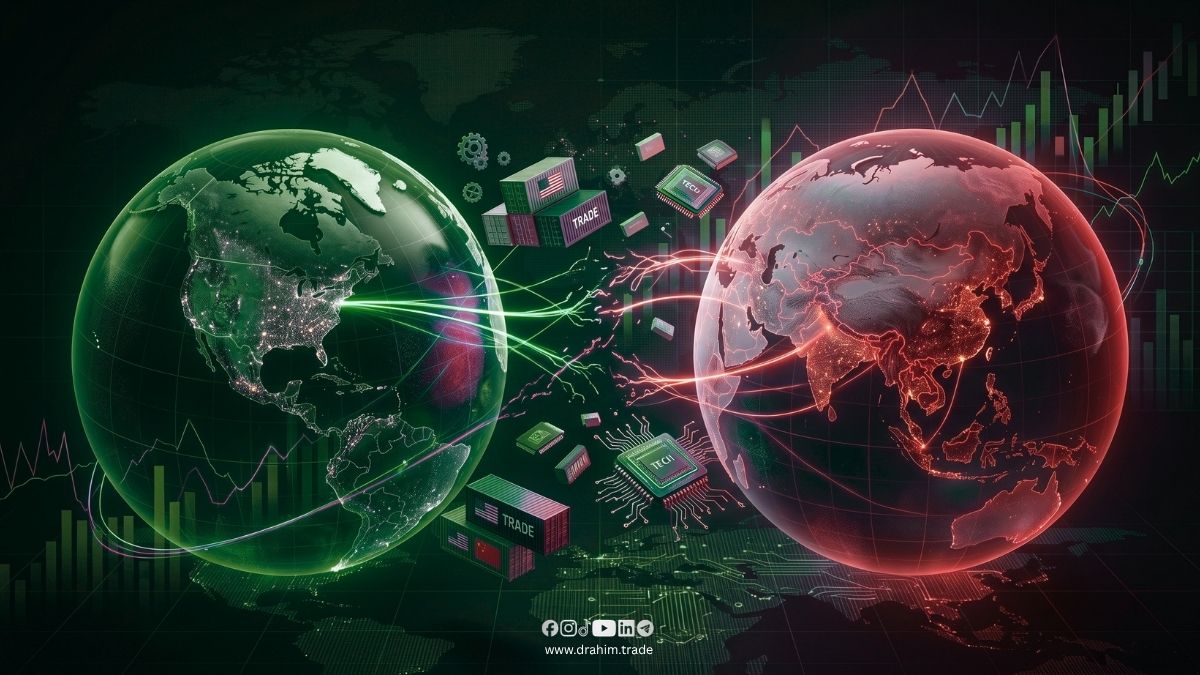
The relationship between the United States and China is considered one of the most influential relationships in the global economy and international politics. Since China’s rapid economic rise, the relationship has shifted from trade cooperation to strategic competition, especially in the fields of trade, technology, and artificial intelligence.
The Trade War
The trade war effectively began in 2018 during Donald Trump’s first presidential term, when Washington imposed tariffs on Chinese imports worth hundreds of billions of dollars, claiming the measures were necessary to protect American industry and reduce the trade deficit. Beijing responded with retaliatory tariffs on American goods, particularly agricultural products.
In 2020, the “Phase One” trade agreement was signed, but disputes continued over technology, government subsidies, and intellectual property rights.
Politically, Trump adopted an economic nationalist approach centered on the “America First” policy. He sought to bring industries back to the United States and reduce dependence on China. He also imposed trade sanctions and technological restrictions on major Chinese companies, particularly in the telecommunications and semiconductor sectors.
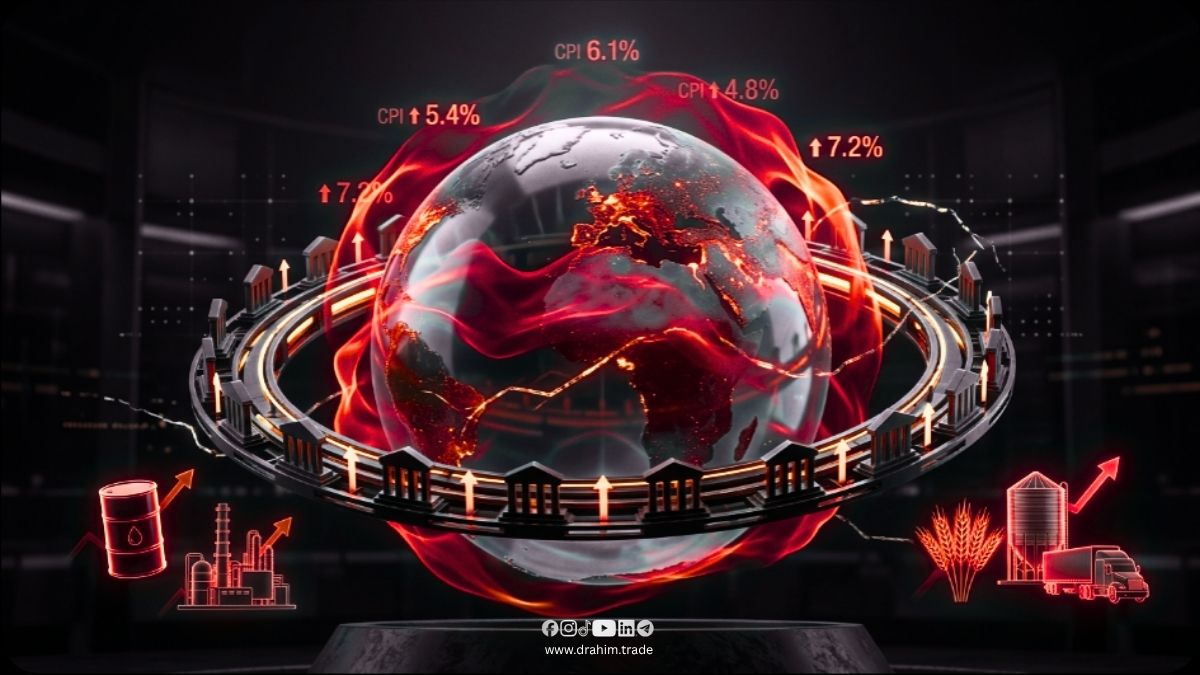
Economically, Trump’s policies aimed to strengthen domestic manufacturing, but they also increased import costs and inflationary pressures on American consumers.
The Impact of the Trade Conflict on the World
The trade war affected the global economy by disrupting supply chains and increasing production and international trade costs. It also pushed multinational companies to relocate some of their factories from China to countries such as Vietnam, India, and Mexico.
Global trade growth slowed, while uncertainty in financial markets increased, particularly in the technology, energy, and industrial sectors.
U.S. Courts Rejecting the Tariffs
In a significant development, several American courts issued rulings against some of Trump’s tariffs, arguing that the president had exceeded his constitutional authority by using emergency economic laws to impose broad tariffs.
In 2025 and 2026, trade and appellate courts invalidated large portions of the tariffs imposed under emergency economic legislation, emphasizing that the constitutional authority to impose customs duties primarily belongs to Congress. The rulings also indicated that the administration had used “emergency” justifications too broadly.
Despite these rulings, reports suggest that Trump and his administration are likely to appeal to the U.S. Supreme Court while continuing to defend the tariff policy as a tool for protecting national security and the American economy.
The Trade War and the Technology Market
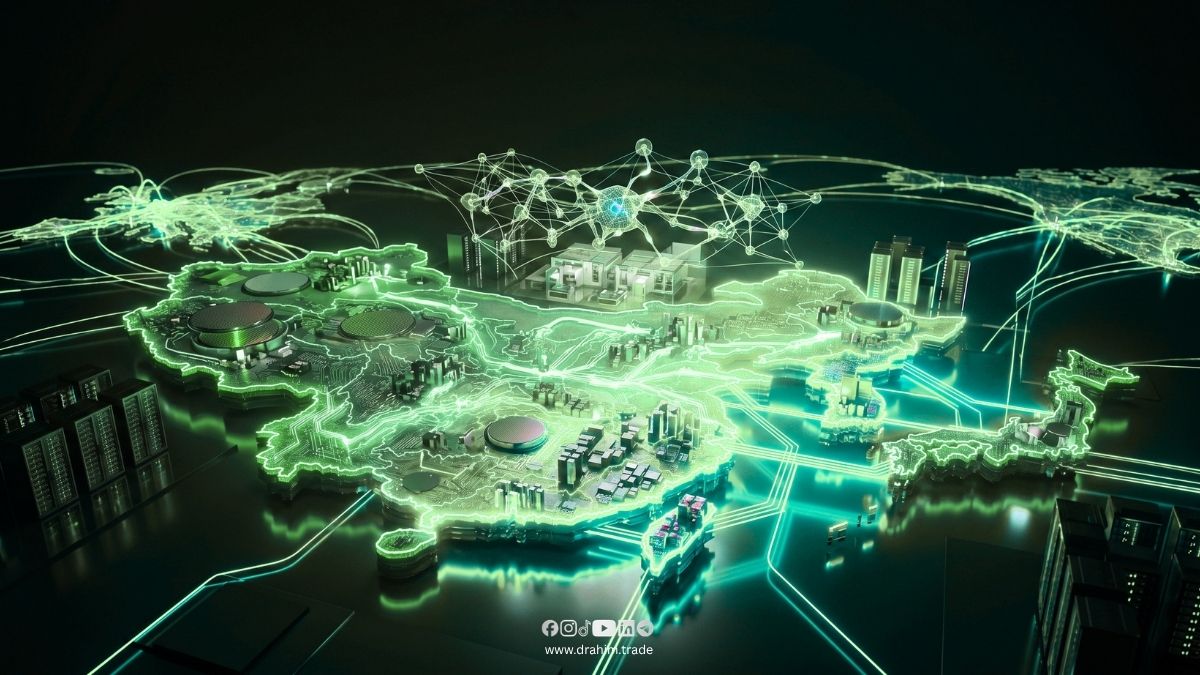
The trade war is directly connected to the semiconductor and artificial intelligence markets because electronic chips have become the foundation of modern industries and smart technologies.
The United States seeks to prevent China from accessing advanced technologies and high-performance chips, while China is investing billions of dollars to achieve technological self-sufficiency. As a result, competition in artificial intelligence, cloud computing, and semiconductors has become part of the broader geopolitical rivalry between the two powers.
Comparison Between the U.S. and Chinese Economies
The U.S. economy remains the largest in the world in terms of nominal GDP, with clear advantages in innovation, finance, global technology, and the dominance of the U.S. dollar.
China, on the other hand, leads in manufacturing, trade volume, and industrial production, and serves as a major hub for global supply chains.
Together, the two countries account for a significant share of the global economy, making any tension between them highly influential worldwide.
Expectations Through 2030
Three major scenarios can be envisioned:
1- Continued Managed Competition
This is the strongest scenario, in which trade and technological rivalry continue without direct confrontation, while partial economic interdependence remains.
2- Sharp Economic and Technological Escalation
This includes expanding sanctions and complete technological decoupling, especially in artificial intelligence and semiconductors. The likelihood of this scenario is moderate because of its high cost to both sides.
3- Gradual Understandings
This is the weakest scenario and involves partial trade agreements aimed at easing tensions due to global economic pressures.
Advice for Investors
Investors are advised to diversify their portfolios geographically and sectorally, with a focus on technology, artificial intelligence, energy, and digital infrastructure sectors.
It is also important to closely monitor U.S. and Chinese trade decisions because they quickly affect global markets. In addition, reducing dependence on investments that are highly sensitive to trade conflicts is recommended, while maintaining defensive assets to protect against market volatility.