Analytical Report on the Technology Sector in Global Equities
First: Global Performance of the Technology Sector
United States
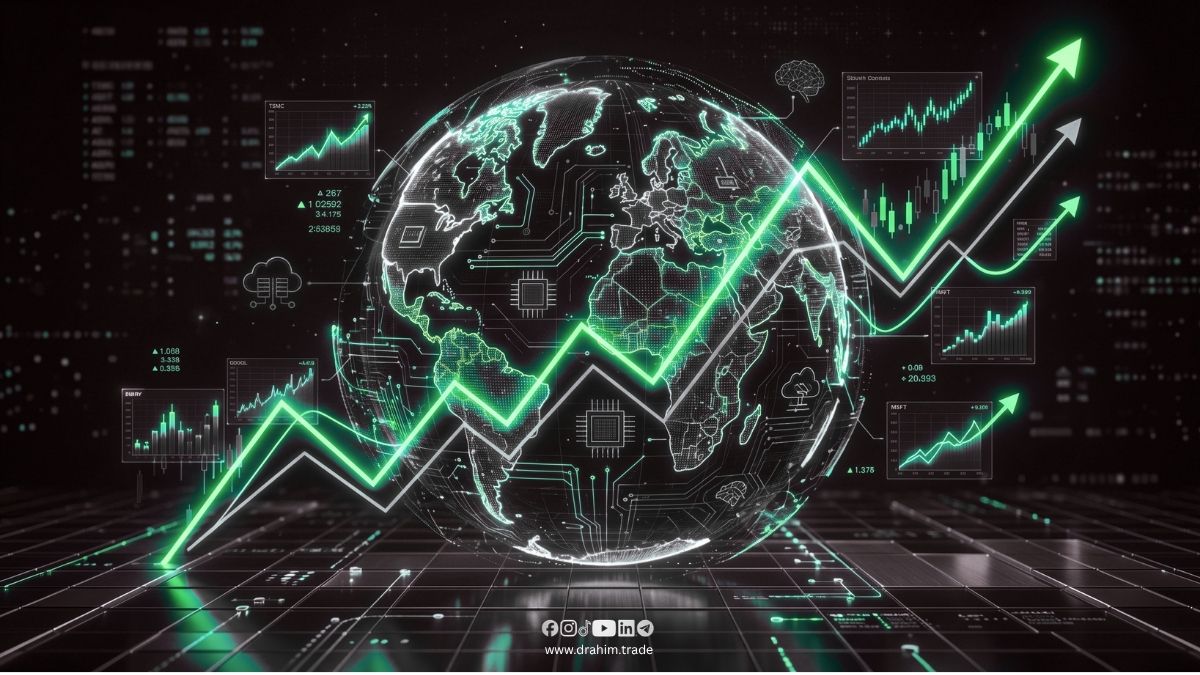
The NASDAQ Composite index is the most prominent benchmark for the performance of technology companies. During 2024–2025, it recorded strong gains exceeding 25% in some periods, driven by the surge in artificial intelligence stocks. Companies such as NVIDIA and Microsoft led this boom, supported by growing demand for cloud computing and AI solutions.
منطقة اليورو
The STOXX Europe 600 Technology index experienced relatively moderate growth, ranging between 10–15%, due to economic slowdowns in some EU countries. However, companies like ASML contributed to supporting the sector, particularly in semiconductor manufacturing equipment.
Asia
In Asia, the MSCI Asia Information Technology Index showed mixed performance. Markets such as South Korea and Taiwan recorded strong growth, while Chinese markets were affected by regulatory factors. Companies like Taiwan Semiconductor Manufacturing Company (TSMC) played a major role in supporting the sector.
Main Drivers of These Changes:
- The boom in generative artificial intelligence.
- Increased spending on digital infrastructure.
- Stronger-than-expected earnings from major companies.
Second: Key Market Drivers
1. Demand for Artificial Intelligence
The world is witnessing unprecedented demand for artificial intelligence technologies, especially following the rise of generative applications. This demand has significantly boosted company valuations and stock prices.
2. Semiconductors
Semiconductors represent the backbone of the technology sector. Any disruption in supply chains directly impacts production. Companies such as Intel and TSMC play a critical role in maintaining market stability.
3. Dominance of Big Tech
Major technology companies (Big Tech) continue to strengthen their dominance, capturing a large share of investments. Their vast resources for research and development give them a sustained competitive advantage.
Third: Economic Analysis
1. Technology in Daily Life
Technology has become an integral part of everyday life, from smartphones to cloud services and e-commerce, reinforcing continuous demand for innovation.
2. Transformations in Global Markets
Markets are shifting toward a digital economy, where data and artificial intelligence have become key economic assets, reshaping the nature of global competition.
3. Perspectives of Major Economic Institutions
- JPMorgan Chase believes the technology sector will remain the primary driver of growth in financial markets.
- The World Bank confirms that technology contributes to increasing global productivity.
- The U.S. Securities and Exchange Commission (SEC) monitors risks related to inflated stock valuations.
- Nasdaq serves as a key platform for financing technological innovation globally.
Fourth: Future Outlook (2026–2027)
Scenario 1 (Positive – 50% probability)
Continued strong growth driven by AI expansion and increased investments, leading to additional gains of 15–20%.
Scenario 2 (Moderate – 30% probability)
Relative slowdown due to market saturation and higher interest rates, with limited growth between 5–10%.
Scenario 3 (Negative – 20% probability)
Sharp correction caused by overvaluation or regulatory constraints, potentially resulting in declines of up to 15%.
Fifth: The Future of Technology Over the Next Decade
AI applications are expected to expand into:
- Healthcare (automated diagnosis)
- Education (personalized learning)
- Transportation (autonomous vehicles)
Reliance on cloud computing and the Internet of Things (IoT) will also increase, enhancing digital integration across sectors.
Conclusions and Recommendations
Conclusions:
- The technology sector remains the main driver of global markets.
- Artificial intelligence is currently the most influential factor.
- Risks include inflated valuations and overreliance on a limited number of companies.
Recommendations:
- Diversify investments within the sector to reduce risk.
- Monitor regulatory developments and supply chains.
- Focus on companies with strong fundamentals, not just market momentum.
Overall, the technology sector remains an attractive investment opportunity, but it requires careful analysis and prudent risk management.