Renewed Military Escalation in the Strait of Hormuz and Market Reactions
Military escalation is once again dominating the scene in the Strait of Hormuz. After an extension of the ceasefire period, hopes were raised regarding negotiations between the United States and Iran. However, these talks yielded no results, and the situation has now escalated into an exchange of military attacks yesterday.
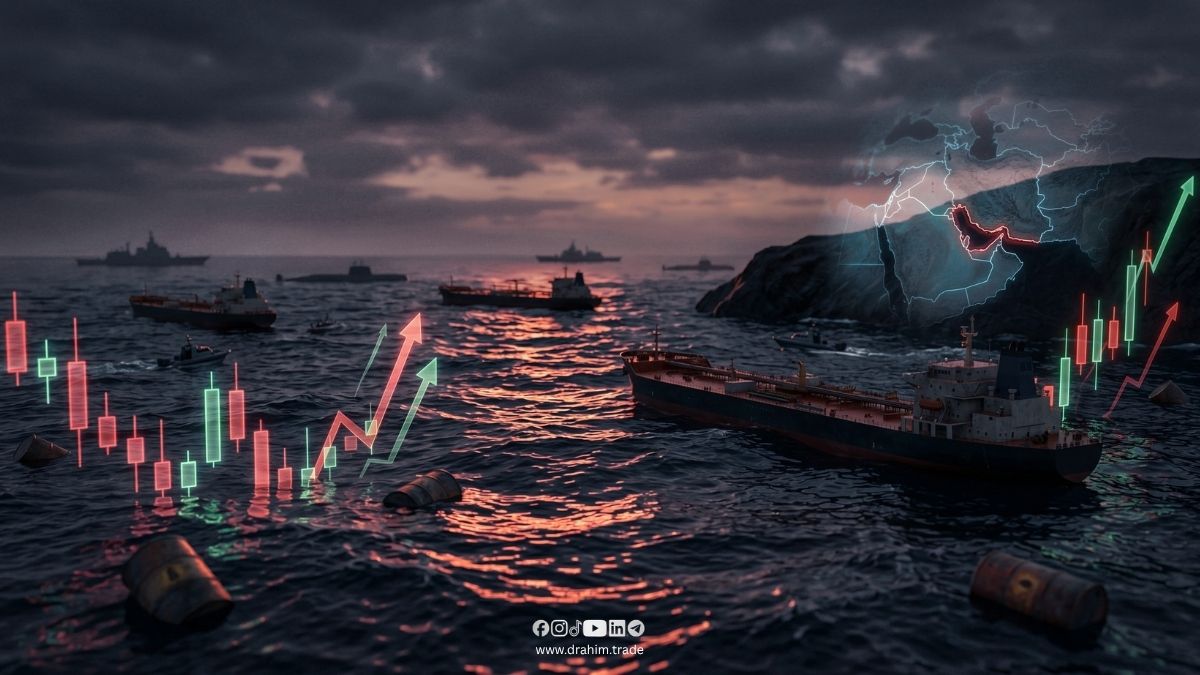
The Strait of Hormuz is a vital and central pressure card for Iran. Preventing tankers from passing and mining the shipping lane represents one of the most dangerous developments in the Iran war. Clashes between both sides erupted in the strait, and U.S. forces announced the destruction of Iranian vessels, which prompted Iran to respond with attacks against the United Arab Emirates.
Iran targeted oil production centers in the UAE, with damage reported at an oil facility in the city of Fujairah. This marks an escalation that breaks a fragile ceasefire period, during which neither side reached any agreement outlining clear terms to end the conflict.
Commodity Markets
Gold showed some gains after rebounding from the $4,522 level, now recording $4,580 per ounce in the spot market. However, current developments are not supportive of gold in the short term, and it may remain in a sideways trend if the intensity of the conflict in Iran increases.
Meanwhile, oil prices declined following these developments, although they remain above $100. Crude is trading at $111.38 per barrel in the futures market, while West Texas Intermediate (WTI) is at $102.57.
The U.S. dollar remains stable so far, showing no significant price movements during today’s trading session. The dollar index stands at 98.35 against a basket of major currencies.
European Session Stocks
Most London session stocks rose today. The Euro Stoxx pan-European index increased by 1.45%, Germany’s DAX rose by 1.34%, while the UK’s FTSE 100 index declined by 1.35%.
Australian Interest Rate Hike
Earlier today, the Reserve Bank of Australia raised interest rates by 25 basis points to 4.35%. This move reflects concerns over global inflation, which is expected to impact the economy amid the ongoing Iran war and declining oil supplies.
This decision represents an early step toward tighter monetary policy by one of the major global central banks. Central banks have maintained current interest rates while postponing monetary easing indefinitely. It is likely that some major economies may resort to further interest rate hikes if the war has a more damaging impact on commodity prices and living standards.